What insect migrates over 2,000 miles from Canada to Mexico each fall, where it overwinters and begins its reproductive cycle?
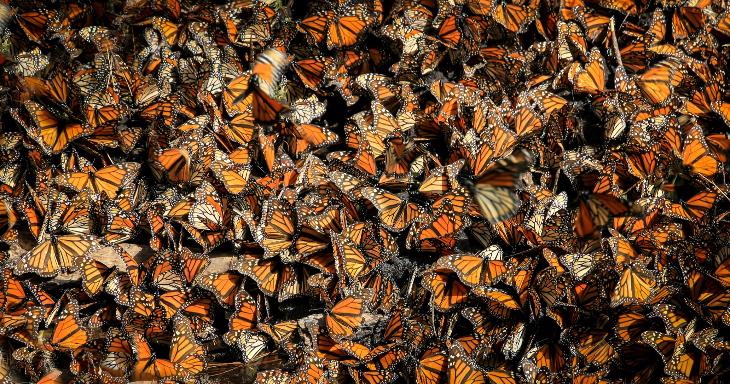
The correct answer is monarch butterfly. Eastern monarchs migrate south each fall to overwintering forests in central Mexico.
The monarch butterfly is the answer. Eastern monarch butterflies are known for a remarkable fall migration from Canada and the northern United States toward overwintering forests in central Mexico, with milkweed, multi-generation reproduction, and long-distance navigation all playing important roles in the insect’s life cycle.
The Monarch Butterfly Migration
Monarch butterflies can travel over 2,000 miles during their fall migration. Eastern monarchs move south from Canada and the northern United States toward Mexico as temperatures drop and seasonal conditions change. The journey is especially unusual because such a small insect can navigate across such a vast distance to reach winter habitat.
Overwintering in Mexico
Eastern monarchs overwinter in mountain forest areas of central Mexico. These forests provide the cool, sheltered conditions the butterflies need to survive through the winter months. The monarchs gather there in large numbers before warmer weather and seasonal changes begin the next stage of the migration cycle.
A Multi-Generation Life Cycle
The monarch migration is not completed by one butterfly making a full round trip from Mexico to Canada and back. One long-lived generation makes the major southbound fall journey to Mexico, while later generations continue the northward movement in stages. This multi-generation pattern makes the monarch’s reproductive cycle closely tied to its migration route.
Milkweed and Conservation Concerns
Milkweed is essential to monarch survival because monarch caterpillars feed on it. Adult butterflies also depend on suitable habitat and nectar sources along the migration route. Conservation concerns around monarchs are closely tied to the loss of milkweed, overwintering habitat, and migration corridors that support the insect’s long-distance life cycle.
Ready for another challenge?
Start a 10-question challenge and test your knowledge of wildlife, birds, insects, plants, oceans, forests, and natural wonders.
Start the Challenge