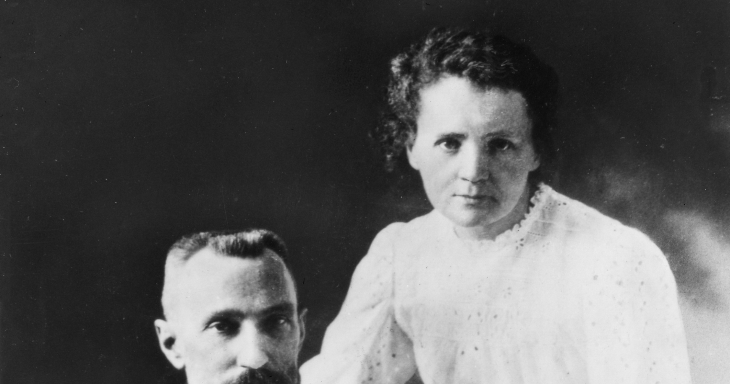
Who was the first female to win the Nobel Prize?
The correct answer is Marie Curie. She shared the 1903 Nobel Prize in Physics for research connected to radioactivity.
Marie Curie is the answer. Curie became the first female Nobel Prize winner when she shared the 1903 Nobel Prize in Physics with Pierre Curie and Henri Becquerel for research connected to radioactivity, before later adding a 1911 Nobel Prize in Chemistry for work involving radium and polonium.
Marie Curie’s 1903 Nobel Prize
Marie Curie became the first woman to win a Nobel Prize in 1903. The award was the Nobel Prize in Physics, and she shared it with Pierre Curie and Henri Becquerel. That distinction is important because she was not the first Nobel laureate overall, but the first female Nobel laureate.
Radioactivity Research With Pierre Curie
The 1903 Physics prize recognized work connected to radioactivity. Henri Becquerel had discovered spontaneous radiation from uranium salts, while Marie Curie and Pierre Curie carried out further research into radioactive substances. Marie Curie’s scientific work helped make radioactivity a central field of modern physics and chemistry.
A Second Nobel Prize in Chemistry
Curie later won the 1911 Nobel Prize in Chemistry. That award recognized her work involving radium and polonium, two elements closely tied to her research. By winning Nobel Prizes in both Physics and Chemistry, she became the first person to receive Nobel Prizes in two different scientific fields.
A Milestone for Women in Science
Marie Curie’s Nobel achievement stood out because formal scientific institutions in her era were still heavily male-dominated. Her recognition by the Nobel Committee placed a woman’s laboratory research at the center of international science. The first-woman distinction, the 1903 Physics prize, and the later 1911 Chemistry prize make Curie one of the most historically significant Nobel laureates.
Ready for another challenge?
Start a 10-question challenge and test your knowledge of actors, singers, inventors, presidents, authors, athletes, scientists, and historical figures.
Start the Challenge