.jpg)
On May 20, 1927, which American pilot took off from New York on the first solo nonstop flight across the Atlantic?
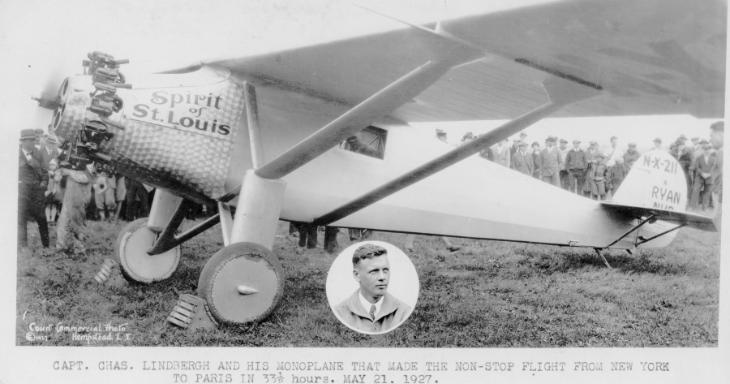
The correct answer is Charles Lindbergh. In 1927, he flew the Spirit of St. Louis from New York to Paris without a co-pilot or stop.
Charles Lindbergh is the answer. Flying the custom-built Spirit of St. Louis, Lindbergh left Roosevelt Field on Long Island for Paris in pursuit of the Orteig Prize, a $25,000 award for the first nonstop flight between New York and Paris.
The Spirit of St. Louis
The Spirit of St. Louis was a single-engine monoplane built specifically for Lindbergh’s transatlantic attempt. Its design prioritized fuel capacity and range, which were essential for a solo nonstop crossing of the Atlantic. Lindbergh flew without a co-pilot, making the aircraft’s reliability and his endurance central to the flight.
The New York to Paris Route
Lindbergh took off from Roosevelt Field on Long Island, New York, on May 20, 1927. He flew across the Atlantic for more than 33 hours and landed at Le Bourget Field near Paris, France, on May 21. The route covered about 3,600 miles and completed the New York-to-Paris challenge set by the Orteig Prize.
Why Lindbergh’s Flight Mattered
Lindbergh’s achievement was not the first Atlantic crossing by air, but it was the first solo nonstop flight across the Atlantic. That precision matters because earlier aviators had already crossed the ocean using different routes, crews, or stops. His successful flight showed that long-distance solo aviation could be achieved across one of the world’s most difficult air routes.
Ready for another challenge?
Start a 10-question trivia challenge and test your knowledge of presidents, aviation milestones, wars, speeches, landmarks, and historic events.
Start the Challenge