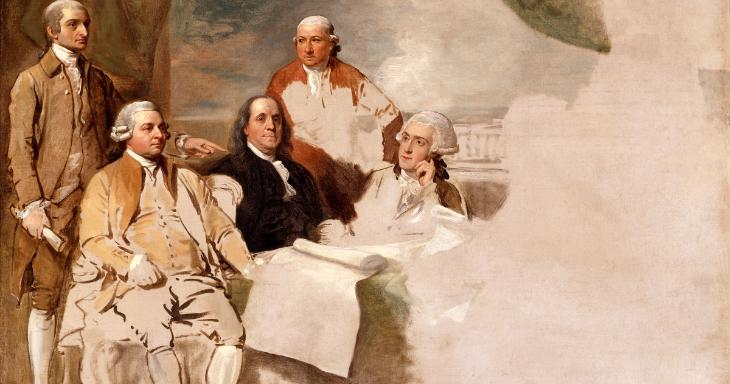

Which important treaty, signed in 1783, officially ended the American Revolutionary War?
The correct answer is the Treaty of Paris. Signed in 1783, it ended the American Revolutionary War and recognized U.S. independence.
The Treaty of Paris is the answer. Signed in Paris on September 3, 1783, the peace treaty brought Great Britain and the new United States into a formal postwar agreement, with British recognition of United States independence as its central result. American negotiators Benjamin Franklin, John Adams, and John Jay represented the United States, while the agreement was made under the authority of King George III’s government.
What the Treaty Settled
The Treaty of Paris set major terms for the new country after the American Revolutionary War. Great Britain recognized the United States as independent and accepted broad boundary terms that extended American territory west to the Mississippi River. The treaty also addressed fishing rights, the payment of certain debts, and recommendations about the treatment and property rights of Loyalists who had supported Britain during the American Revolution.
The American Negotiators
Benjamin Franklin, John Adams, and John Jay were the key American negotiators in the peace process. Their work followed preliminary peace articles agreed to in 1782, which laid the groundwork for the final 1783 treaty. The negotiations required the Americans to secure recognition from Great Britain while also protecting territorial, economic, and diplomatic interests for the new United States.
Why Paris Was the Diplomatic Center
Paris was the setting for the treaty because it was a major diplomatic center and France had been an essential American ally during the war. The Treaty of Paris was part of a larger set of peace arrangements involving Britain, France, Spain, and the Netherlands. For the United States, its legal importance was direct: it confirmed independence, defined major borders, and officially closed the war with Great Britain.
Ready for another challenge?
Start a 10-question trivia challenge and test your knowledge of presidents, founding documents, wars, treaties, speeches, and historic events.
Start the Challenge