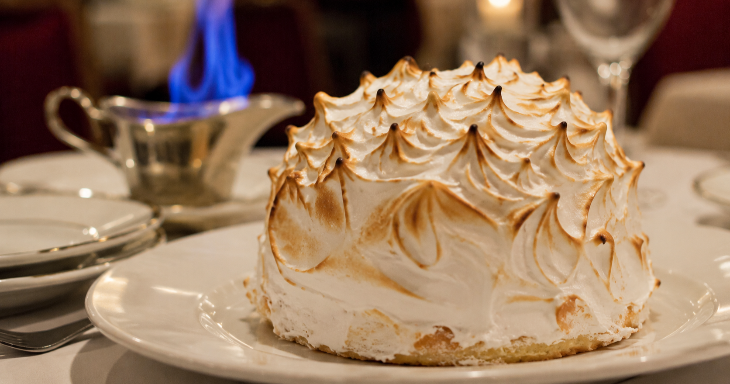
Which 1950s-era dessert is made with layers of ice cream, sponge cake, and meringue, then baked quickly to brown the outside?
The correct answer is Baked Alaska. Its meringue coating browns quickly while helping protect the ice cream inside.
Baked Alaska is the answer. The classic dessert combines a frozen ice cream center with cake and browned meringue, creating a dramatic hot-outside, cold-inside effect that made it a natural fit for restaurant service and mid-century dinner-party presentation.
How the Meringue Protects the Ice Cream
Baked Alaska works because the ice cream is set on a cake base and completely covered with meringue before the dessert is browned quickly. The meringue is made from whipped egg whites, so its foam traps air and slows heat transfer toward the frozen center. The cake layer also helps insulate the ice cream from the hot pan or serving surface.
A Showpiece Dessert for Restaurants and Dinner Parties
Baked Alaska is usually browned under high heat for a short time, often in an oven, under a broiler, or with a kitchen torch, so the outside colors before the ice cream melts. It was not invented in the 1950s, but it fit mid-century dessert tastes because it looked impressive and relied on a clear kitchen trick. The contrast between browned meringue, soft cake, and cold ice cream made Baked Alaska a memorable restaurant dessert and classic dinner-party showpiece.
Ready for another challenge?
Start a 10-question trivia challenge and test your knowledge of classic snacks, cereals, candies, restaurants, desserts, and food brands.
Start the Challenge